
The three words that lose you the sale
A customer finds your product on a WhatsApp status, an Instagram post, or a TikTok comment. They're interested. They type: "How much be the delivery to [wherever]?"
And you — the seller — don't actually know. You haven't booked a rider yet. You don't know if today's traffic near Kaneshie market means a longer trip than usual, or whether the rider you normally use is even free. So you type back the only honest answer you have: "Let me check and come back to you."
That sentence feels harmless. It isn't. On WhatsApp, Instagram, and TikTok, a customer's attention span between "interested" and "gone to the next seller" is short — there's always another shop a scroll away, often selling the exact same thing. Every minute you spend "checking" is a minute the customer has to change their mind, get distracted, or simply message someone else who answered faster. A delivery quote that takes ten minutes to arrive is, functionally, often a lost sale — even if the product, the price, and the trust were all already there.
This is a genuinely different problem from the one most sellers assume it is. It isn't that delivery is too expensive (that's a real, separate problem — worth reading on its own). It's that the price is unknown at the exact moment the customer is deciding, and unknown prices kill momentum in a DM conversation the way they'd never kill it in a physical shop, where a customer standing in front of you will wait the ten seconds it takes you to think.
Why "let me check" is the default, and why it doesn't have to be
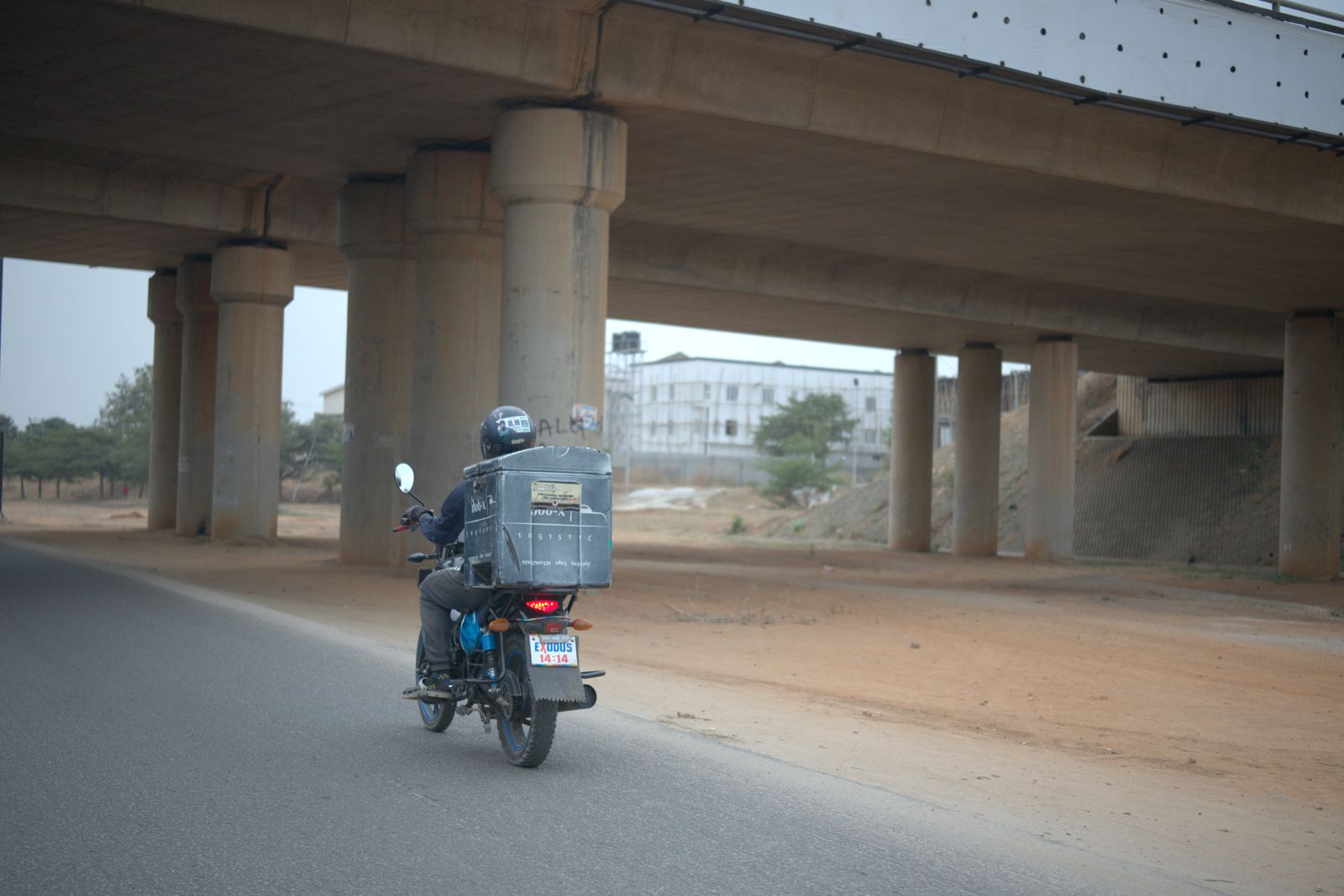
Most solo sellers negotiate delivery one trip at a time: a customer confirms an order, then the seller calls or flags down whichever okada or tricycle rider is around, describes the pickup and drop-off, and gets a fare quoted back verbally, on the spot. That's a real, working system — it's just built for after the sale is already confirmed, not for the moment the customer is still deciding whether to buy.
The fix isn't finding a faster rider. It's separating two things that most sellers currently bundle together: knowing roughly what a delivery should cost, and actually booking someone to do it. The first one, you can figure out once, in advance, sitting at home with a notebook or a notes app. The second one still happens per order, exactly as it does now — but by the time you get there, the customer already has their price and has already said yes.
What actually drives a delivery price, once you strip out the guessing
Almost every reasonable delivery pricing model — whether it's a courier company, a delivery app, or an experienced rider quoting you off the top of their head — is built from the same two ingredients: a base charge for showing up at all, and a per-kilometer charge for the actual distance covered. Everything else (fuel, time, a bit of margin) gets folded into those two numbers.
As one concrete, real example: GoPiki's own delivery-fee formula — the one used to calculate what a customer pays for a single parcel on the app — is a GHS 10 base charge plus GHS 3 per kilometer, with a GHS 12 minimum and a GHS 150 cap. Worked out, that means a delivery under 1 km comes to about GHS 12, a 5 km trip lands around GHS 25, 10 km is roughly GHS 40, and 20 km is about GHS 70. That's not a universal number every rider or courier in Ghana charges — fuel costs, traffic, and individual riders' own pricing all vary — but it's a real, working example of the base-plus-distance logic that sits underneath almost every legitimate delivery price, and it's a useful anchor if you've never had to think about your own pricing in these terms before.
The lesson to take from it isn't "charge exactly this." It's: once you know roughly how far your typical deliveries travel, you can build a price you're comfortable quoting before a rider is even involved — because the actual formula doesn't change trip to trip. Only the distance does.
Building your own price sheet in about ten minutes
You don't need an app or a spreadsheet system to do this. You need your own delivery history and about ten minutes.
1. Pull your last 15–20 completed deliveries. Chat history, old receipts, whatever you've got. For each one, note roughly where it went — not the exact address, just the area (Dansoman, East Legon, Adenta, Tema, wherever your customers actually are).
2. Group them into 3–5 zones based on your own patterns, not a generic map. A common shape looks like: Zone 1 — same neighborhood/immediate area, Zone 2 — nearby but across town, Zone 3 — the far side of the city, and Zone 4 — outside the city entirely, if you get those often enough to bother pricing them at all.
3. Attach a number to each zone, not a formula you have to calculate live. This is the part that makes it fast in a DM — you're not doing base-plus-distance math mid-conversation, you're reading off a list you already made. Round up slightly rather than down; a rider negotiation that comes in a little under your quote is a fine surprise, one that comes in over it is a loss you eat silently or a customer who thinks you lowballed them.
4. Build in a small buffer, honestly, not a hidden markup. Rain, traffic, and a rider who's further away than usual are real and common in Accra, Kumasi, or Takoradi on any given day. A price sheet that assumes perfect conditions every time will be wrong constantly, and being wrong constantly is worse for trust than quoting a few cedis higher than the theoretical minimum.
5. Keep the list somewhere you'll actually open mid-chat — a pinned note, a photo you keep in your gallery, whatever you'll genuinely check in the 20 seconds you have before a customer loses interest.
Ten minutes of this work, done once, replaces "let me check" with an actual number, every time, for months.
When "let me confirm" is still the right answer
None of this means you should quote blind. A price sheet is for the 80–90% of orders that land somewhere ordinary and predictable. It is not for:
- A genuinely unfamiliar area you've never delivered to before, where you don't have a real reference point.
- Unusual conditions — flooding, a major event closing roads, very late at night when riders are scarcer and pricier.
- An unusually large or heavy item that isn't a normal parcel-sized delivery.
For those, "let me confirm the exact price for you, one moment" is still honest and still fine — customers don't expect an instant answer for something genuinely unusual. What they don't tolerate well is "let me check" as the default answer for an ordinary delivery to an ordinary place, which is most of what a typical seller actually handles.
Where this gets easier once you're past a handful of orders a day
A price sheet solves the "what do I say right now" problem. It doesn't solve everything — once you're regularly dispatching five, eight, or ten orders from a single busy posting or live session, per-order negotiation with individual riders becomes its own separate operational headache, independent of pricing. We've written separately about the signs you've outgrown "just message a rider" as your only fulfillment method, and about what actually breaks first when a TikTok Live session brings in twenty orders at once.
If you get to that point, a published, transparent fee structure — the kind that lets you quote a price before a rider is assigned, because the formula is public rather than a rider's personal guess — is exactly what a batch dispatch tool like GoPiki's is built to give sellers: paste your WhatsApp, Instagram, or TikTok order messages in, get quotes for the whole batch at once, and orders of five or more get a 5% discount on the batch, with one payment covering all of it instead of negotiating trip by trip. It's the same base-plus-distance logic from your own price sheet, just applied automatically instead of from memory. See how bulk dispatch works.
The real fix is answering faster, not guessing better
None of this is about becoming a pricing expert. It's about closing the gap between "a customer wants to buy" and "a customer knows what they'll pay," because that gap — not your product, not your prices, not even your delivery cost itself — is very often the actual reason a sale quietly disappears. A seller who can answer "how much for delivery" in the time it takes to glance at a note wins DM conversations that a seller who says "let me check" simply doesn't.
Selling on WhatsApp, Instagram, or TikTok and tired of negotiating every delivery one rider at a time? See how GoPiki's bulk dispatch works for social sellers, or join the waiting list to be notified when it launches in Ghana.
GoPiki is a Ghana-based delivery platform, pre-launch, building medicine delivery, single parcel delivery, and bulk dispatch for social sellers into one app.