
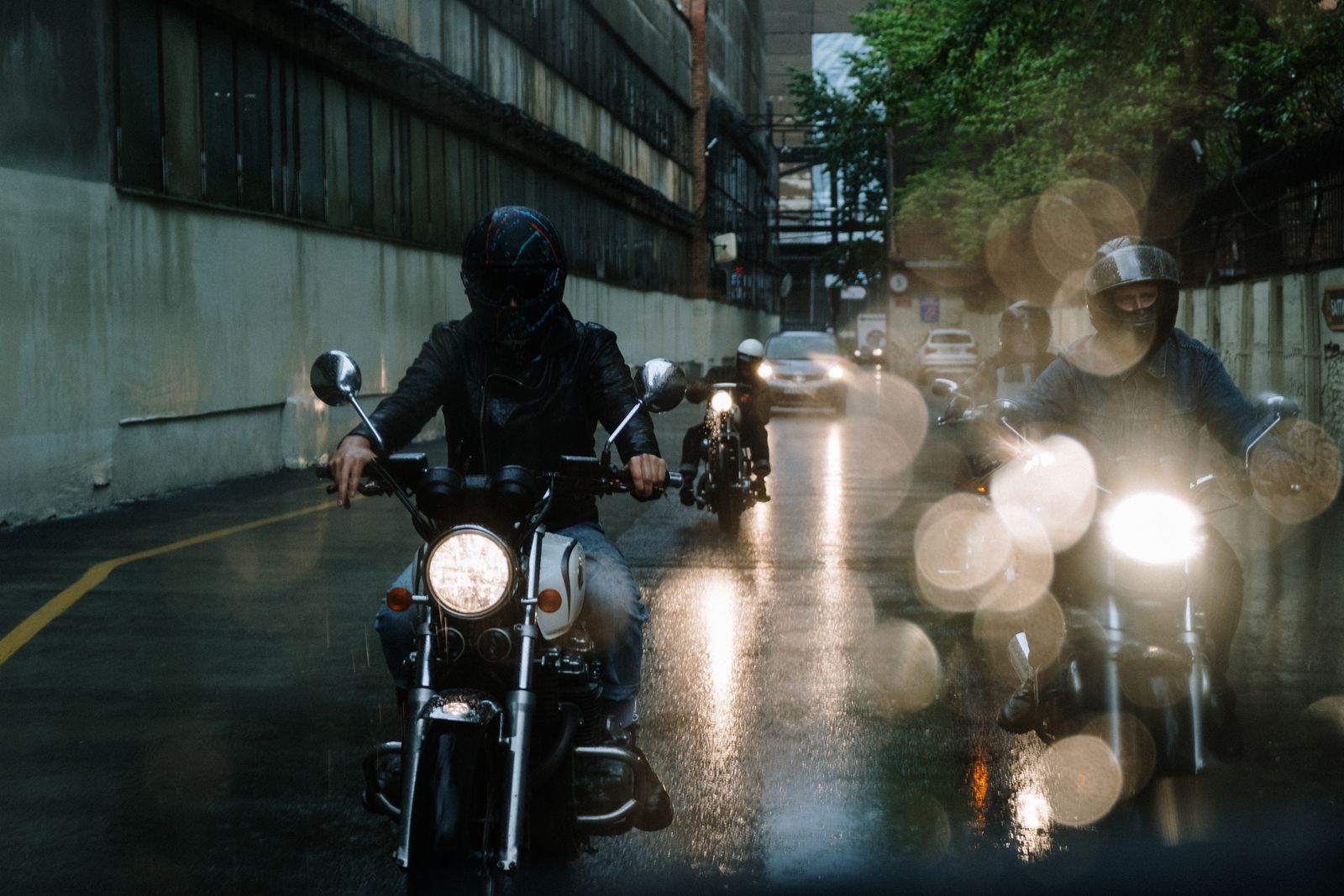
The notification doesn't wait for the water to go down
It's the scenario every rider in Accra, Kumasi, or Takoradi has lived through at least once this rainy season: rain has been falling since morning, the gutters gave up an hour ago, and a job comes through anyway — someone still needs their food, their parcel, their medicine. The street between you and the pickup point is already the colour of the Odaw.
This isn't a hypothetical. On June 28–29, 2026, a single night of torrential rain put Spintex, Adabraka, Achimota, Agbogbloshie, Kaneshie, Mallam, and Alajo under water and shut down the N1 Highway — the road that connects Greater Accra to the rest of the country — completely (GBC Ghana). Several people died in those floods, and GRIDCo and ECG deliberately cut power to substations in Mallam and Achimota as a safety measure, plunging homes and shops into darkness on top of the flooding (ModernGhana). Weeks later, on August 9, 2026, NADMO issued a fresh critical flood alert for the North East Region after Burkina Faso opened the Bagre Dam spillway — a warning that landed just days before this was written (Ghanamma). Meteorologists are also flagging a stronger-than-usual rainy season this year on the back of shifting El Niño conditions (Ghana Business News).
NADMO's own public safety line is blunt and correct: do not attempt to navigate through floodwater, full stop (TheGhanaReport; Adomonline). It's good advice. It's also not a decision framework — it doesn't tell you what to do with the job that's now sitting in your queue, the customer who's waiting, or the ten other roads between here and there that might or might not also be under water.
Why "just don't ride into it" isn't the whole answer
Nobody riding for a living treats "don't do the dangerous thing" as news. What riders actually need — and what almost nothing written for them addresses — is the in-between decision: not "flood, yes or no" but the much more common situation where the road you know is wet, maybe partly blocked, maybe fine ten minutes from now, and you have to decide in real time with money and safety both on the line.
That decision gets harder, not easier, precisely because delivery work runs on flexible, per-job income. Turning down a job costs you that job's earnings outright, with nothing guaranteed to replace it. That's a real tradeoff, not a reason to pretend the risk isn't there — which is exactly why it's worth having an actual method for making the call, instead of deciding in the moment, tired and wet, whether "it doesn't look that deep."
A decision framework for the moment the job comes in
1. Check what NADMO or GMet has actually said today, not what the sky looked like this morning. Ghana's rainy season now regularly comes with same-day advisories — the Bagre Dam alert above is a good example of a warning that changes the calculus for an entire region overnight. A five-minute check of NADMO's channels or a local radio/news update before you go online is cheaper than finding out mid-route.
2. Treat "moving water" and "standing water" as different problems. Standing water you can see the road surface color change under — you can sometimes judge depth. Moving water, especially anywhere near a gutter, culvert, or drain that's overflowing, hides both depth and current, and a motorcycle has far less to work with than a car if it stalls or the wheels lose the road entirely. If you can't tell whether water is moving, treat it as moving.
3. Never treat "the water touched something electrical" as a maybe. The Mallam and Achimota substation shutdowns during the June floods happened because utilities themselves treat flooded electrical infrastructure as an active hazard, not a background risk (ModernGhana). A fallen line, a submerged transformer box, exposed wiring at a flooded junction — any of these is an automatic no, not a judgment call, regardless of how good the job is.
4. Have a real alternate route in your head before you need it, not after. If you ride the same general area regularly, you already know which two or three roads are the low-lying ones that flood first — Spintex, Mallam, parts of the N1, and similar low-lying stretches came up again and again in the June reporting for a reason: it's the same geography every heavy rain. Knowing your area's flood-prone points in advance turns "is this road passable" from a guess into a quick check.
5. Tell the customer or dispatcher what's actually happening — don't just go silent. A message that says "heavy flooding on my route, adding roughly X minutes, still coming" protects you two ways: it buys you the time to actually wait out standing water instead of forcing a bad call, and it means a late or cancelled delivery reads as weather, not as you disappearing. This matters even more for anything time-sensitive — a chronic-medication refill or a same-day prescription doesn't stop mattering to the person waiting for it just because the road flooded; a heads-up is the difference between them worrying and them understanding.
6. Remember that going offline is a legitimate call, not a failure. If your rider app has an online/offline toggle — GoPiki's does, and most delivery platforms operating in Ghana have some version of the same control — stepping offline during genuinely unsafe conditions is exactly what that control is for. It exists precisely so the decision to ride is yours in real time, not a fixed shift you're locked into regardless of what the street looks like. (If you haven't thought hard about how to use that toggle strategically even outside flood conditions, we wrote a separate guide on using it deliberately.)
The part that's easy to forget: what's inside the bag matters too
Rainy season isn't just a rider-safety problem. It's a cargo problem, and almost nobody talks about the second half of it.
A soaked parcel is annoying. A soaked prescription — packaging disintegrated, a label gone illegible, a blister pack that got wet inside a bag that wasn't actually sealed — is a genuinely different kind of problem, and it's an easy one to prevent for close to nothing. A cheap zip-lock bag or a second layer of plastic around anything pharmacy-related, tied off rather than just folded, takes ten seconds and costs almost nothing. If you're regularly carrying medicine deliveries, it's worth keeping a small stock of sealable bags in your kit specifically for rainy season, separate from whatever you use for food or general parcels.
The same logic applies to your own gear. A rain cover for your phone (a second waterproof phone pouch, not just a case) means you can actually keep checking the route and messaging the customer without exposing your phone to the rain doing the checking. It's a small cost against a delivery-halting problem — a dead or waterlogged phone mid-route is its own kind of stranded.
Why this matters more than a normal weather inconvenience
Flooding doesn't just slow deliveries down — it widens the exact gap that makes delivery valuable in the first place. The person who most needs a prescription, a parcel, or groceries brought to their door during a flood is often the person who least can travel to get it themselves: someone on a chronic medication who can't wade through a flooded junction to reach a pharmacy, an elderly resident in a low-lying area cut off by standing water, a social seller's customer whose own street is impassable. The riders willing to make sound, safety-first calls about when and how to move through flood conditions aren't just protecting themselves — they're the reason that gap doesn't turn into someone simply going without.
That's also exactly why "just push through it" is the wrong instinct in the other direction too. A rider who gets hurt or loses a bike to floodwater doesn't just lose that day's income — they're out of the job entirely for however long recovery takes, which helps nobody, least of all the people counting on reliable delivery the next time it rains.
Ghana's rainy season isn't a short, predictable inconvenience anymore — GMet and NADMO's own 2026 advisories point to a longer, more intense pattern than riders have had to plan around before. Building an actual decision process now is worth more than hoping this season is a quieter one than the last.
If you're weighing delivery gig work in Ghana at all — flood season included — GoPiki's rider page has the basics on how the flexible online/offline model works. And if you're a customer or seller trying to get something delivered during a stretch of bad weather, the GoPiki app is one option worth having on your phone before the rain starts, not after.