
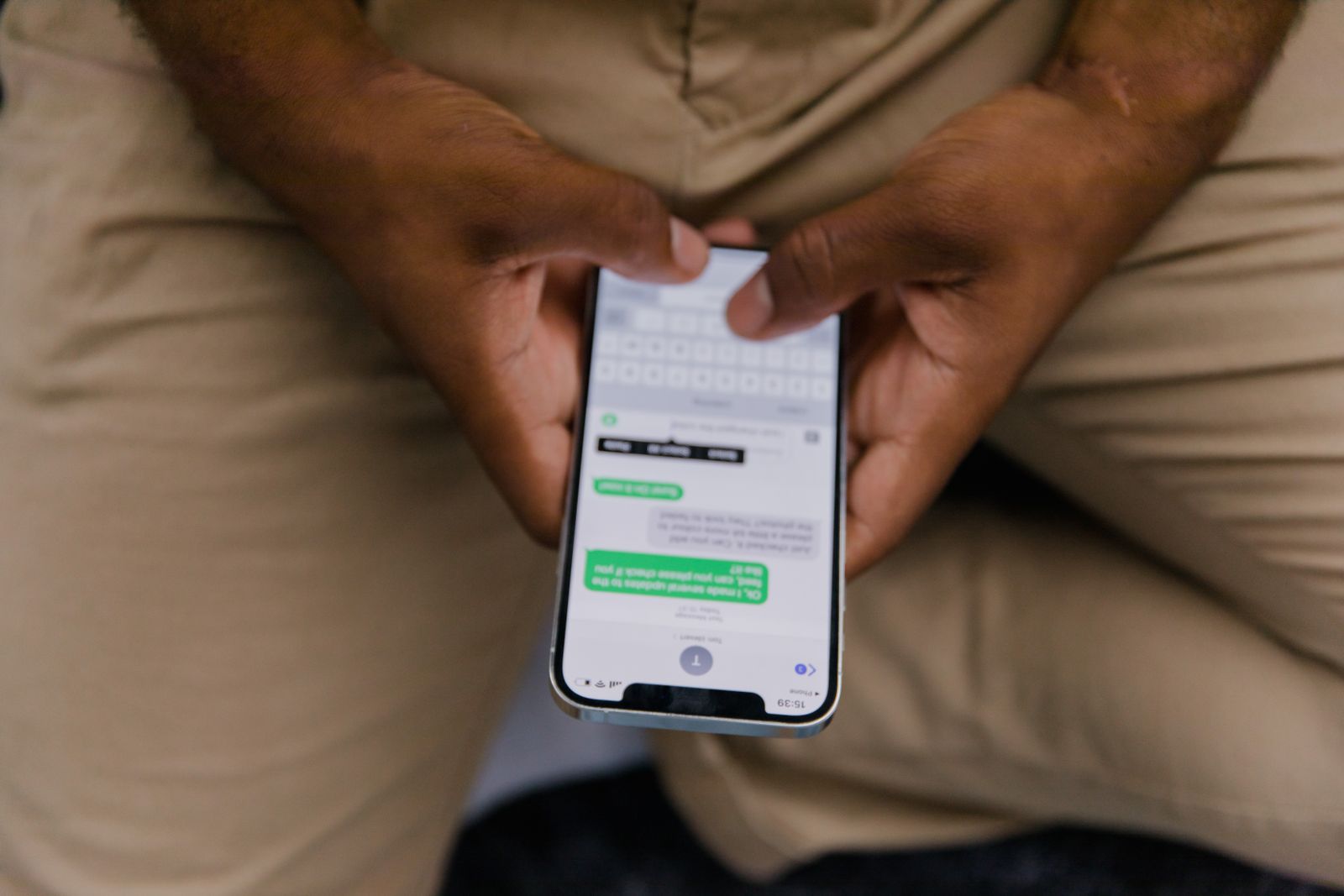
The order that made sense in the chat and no sense on the road
A customer comments "price?" under your TikTok video. You reply in their DMs. They confirm the color, say "yes I want it," send a mobile money screenshot, and type their delivery details in one breathless voice note while walking to a trotro stop. You paste what you can catch into a note on your phone, hand it to a rider an hour later, and move on to the next comment.
Two hours after that, the rider is calling you, not the customer, because the "landmark near Dansoman roundabout, the blue container" doesn't mean anything to someone who isn't from that specific street. The customer isn't picking up. You're now the one troubleshooting a delivery you weren't even present for, for a sale you already made.
This happens constantly to sellers running a shop out of WhatsApp, Instagram, and TikTok in Ghana — and it's almost never the rider's fault, or even really the customer's. It's what happens when the information a delivery needs gets captured the same way the sale itself got captured: quickly, conversationally, and optimized for closing the deal, not for getting a stranger to a specific door three hours later.
Why this is a bigger problem in Ghana than "just be more careful"
It's worth saying plainly: this isn't a discipline problem you can fix by typing faster. Ghana has a well-documented, structural addressing gap underneath every one of these deliveries. Research on courier operators in the Greater Accra area has found that a majority of structures in the city have no visible street name or house number at all — the address, in the formal sense couriers rely on elsewhere, often just doesn't exist (UGSpace, University of Ghana).
The government's answer to this is GhanaPostGPS, the national digital addressing system that divides the whole country into 5-by-5-metre grid squares, each with its own alphanumeric code (something like GA-543-0125). In principle, that code — generated by standing at the actual property and opening the app — replaces "the blue container near the roundabout" with something a stranger could actually navigate to (Graphic Online). In practice, adoption has been uneven: reporting on the rollout has described low public understanding of the system and inconsistent use years after launch (The Conversation).
Put those two things together and you get the actual shape of the problem: there often isn't a clean formal address to fall back on, the one digital tool built to fix that is only as good as whether the customer has ever opened it, and a rider frequently ends up navigating on landmarks and phone calls no matter what. Which means the order message — the words the seller actually collects before dispatch — is doing more of the real navigational work than most sellers realize. Get it loose, and there's nothing solid underneath it. Get it tight, and it's often the only reliable thing a rider has to go on.
What an order message actually needs — not just "the address"
Treat every order like it has to survive being read by someone who has never met the customer, doesn't know the neighborhood, and can't call to "just ask." That's genuinely who reads it: the rider, an hour or a day after the chat happened. A message that makes sense to you, mid-conversation, is not the same thing as a message that works for that person.
Five things, every time, before you consider an order ready to dispatch:
- Full name — the receiver's, not just the payer's. Someone ordering a gift for their sister and giving their own name creates a mismatch a rider can't resolve at the door. Ask specifically: "who's the delivery for?"
- A phone number you've actually confirmed is live. Not the number the order came in on by default — WhatsApp orders routinely come from a different number than the one someone wants called for delivery, especially when a customer is ordering from a shared or work phone. One quick "confirm the number to call for delivery" question catches this before it's a problem on the road.
- The delivery address in the customer's own words, plus a digital address if they have one. Ask directly: "do you have a GhanaPostGPS digital address?" Plenty of customers do and simply won't offer it unless asked — it costs nothing to check, and when it exists, it's the single most reliable line in the whole message.
- Two independent landmarks, not one. "Near the roundabout" is one point of failure. "Near the roundabout, opposite the blue-gate compound with the provisions shop" is two, and two is what actually lets a rider triangulate on the ground when GPS pins drift, which they routinely do in areas with dense, unmarked construction.
- What's actually in the order. Item, color, size, quantity — read back in your own words before the customer sends payment, not assumed from a comment made three messages ago. A wrong item is a different failure than a wrong address, but it's the same root cause: nobody made the customer confirm before it left the chat.
The read-back is the part sellers skip
Every one of the details above is only worth collecting if someone actually checks it before the order goes out — and this is the step that gets skipped most, because it feels like it's slowing down a sale that already happened. It isn't. It's the cheapest fifteen seconds in the entire transaction.
Before you mark an order ready for pickup, send the customer one message back: name, number, address or digital address, landmark, and item, all in one block, with "confirm this is correct?" at the end. It takes fifteen seconds to type and it catches the mismatched name, the old number, the wrong color, and the vague landmark before a rider is anywhere near involved — while the customer is still in the chat and can actually answer, instead of an hour later when they're on a trotro and hard to reach.
If you're only taking two or three orders a day, this is a manageable habit. The real trouble starts once a single TikTok Live or a good WhatsApp broadcast pulls in fifteen or twenty replies inside an hour, and you're trying to hold all five fields, for each of fifteen customers, in a scattered mix of DMs, voice notes, and comment screenshots — with no single place any of it lives until you're typing it into a rider's ear from memory.
Where the tooling comes in — after the habit, not instead of it
This is exactly the gap AI-assisted order parsing is built to close, and it's worth being precise about what it actually does and doesn't fix. GoPiki's bulk dispatch tool lets a seller paste order text — straight from a WhatsApp or Instagram conversation — and has its AI extract the recipient details automatically, instead of a seller retyping every name, number, and address by hand into a separate delivery form for each of up to 10 orders in a single batch. Batches of five or more orders get a 5% discount, and the whole batch shows up on one tracking screen instead of ten separate conversations.
What it doesn't do is invent an address that was never collected. If the underlying message a seller pastes in only has "near the roundabout, blue container," extracting that faster doesn't make it more precise — it just moves the same gap downstream, onto the rider, faster. The tool removes the retyping labor. It doesn't replace the read-back. The five-field habit above is still the part that actually prevents a misdelivery; the parsing tool is what stops that habit from falling apart the moment order volume goes from three a day to fifteen in an hour.
Underneath the batch tooling either way, it's the same delivery mechanics as a single order: a rider gets auto-assigned, the customer pays through Paystack, and delivery is confirmed with an OTP/PIN at the door — so there's a checkable record the parcel actually arrived at the address that was actually collected, not just a rider's word for it after the fact.
The habit costs fifteen seconds. The alternative costs a customer.
A misdelivered order because of a vague address or a wrong number isn't just an annoyance — it's a refund, a redo delivery you're paying for twice, or a customer who never orders from you again because "the delivery didn't show up" is the story they'll tell, not "I gave a vague landmark." Ghana's addressing gap is real and it isn't going away on a seller's timeline. But the five fields above are inside a seller's control regardless of what's happening with GhanaPostGPS adoption citywide — and the fifteen-second read-back is the cheapest insurance in the entire transaction.
If you're dispatching enough orders that keeping track of all five fields across a dozen chats has started to feel like its own job, see how GoPiki's bulk dispatch tool works for social sellers. And whether it's one order or ten, download GoPiki to get it to the right door the first time.
GoPiki is a Ghana-based delivery platform for medicine and parcels, including bulk dispatch for social sellers. Available on Google Play and the App Store.