
A minister admits the law doesn't see you
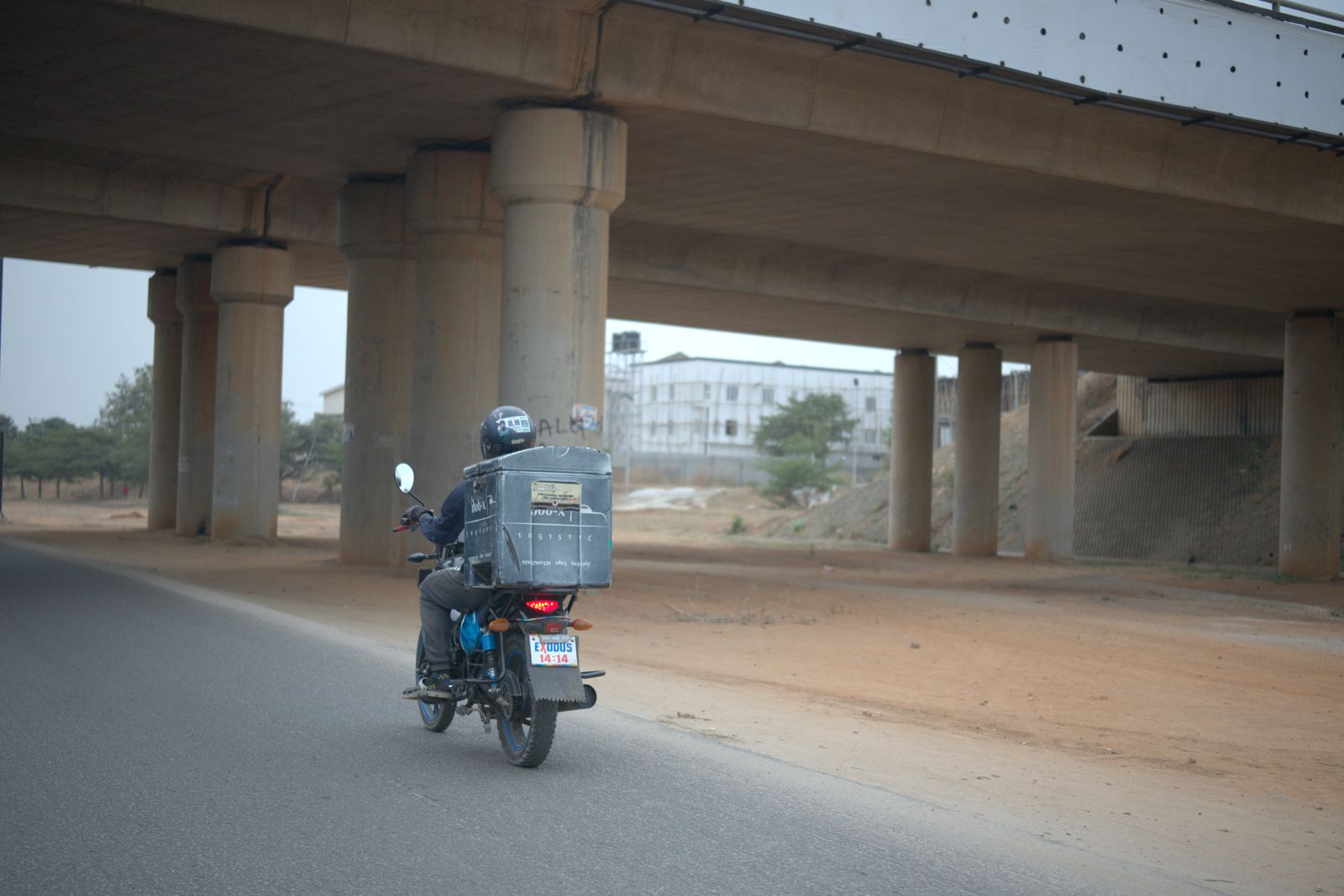
On June 22, 2026, at Ghana's first-ever Labour Law Annual Conference in Accra, Labour Minister Dr. Rashid Pelpuo said something that sounds obvious once you hear it, but rarely gets said out loud by a government official: the law doesn't currently know delivery riders, ride-hailing drivers, or platform-based influencers exist.
"Existing labour legislation does not explicitly recognise platform workers, influencers and other participants in the digital economy," Pelpuo told the conference. He said reforms would extend "legal recognition and protection" to gig and platform workers, and that the amendment process should be done "before the end of the year."
If you deliver food, medicine, or parcels for a living in Accra, Kumasi, or Takoradi right now, that sentence is your entire employment status in one line: you don't legally exist as a category of worker. Not because anyone decided riders shouldn't have rights — but because the law was written for a world of fixed employers and fixed shifts, and the platform economy simply grew up around it, unaddressed.
That's the gap the minister says he wants to close. The harder question — the one the announcement doesn't answer yet — is what "protection" is actually going to mean in practice.
What the gap looks like when someone actually measures it
You don't have to guess what happens when gig work has no legal floor under it. Fairwork — the international research network that scores delivery and platform companies against five basic standards (fair pay, fair conditions, fair contracts, fair management, and fair representation) — has been rating platforms operating in Ghana since 2021.
The results are not close. In the 2021 round, out of ten platforms scored, most — including Bolt, Bolt Food, Jumia Food, Uber, and Yango — scored just 1 out of 10. The best performer, The Black Ride, scored 7. By 2022, only two platforms had scores measured at all (Glovo and The Black Ride, both at 5/10); the rest went unscored, not because they'd fixed anything, but because the audit simply didn't cover them that year.
Read the actual criteria and the gap becomes concrete instead of abstract. A low "fair pay" score usually means a rider isn't guaranteed a minimum hourly return once you subtract fuel, phone data, and unpaid waiting time between jobs. A low "fair conditions" score usually means there's no insurance if a rider is injured on the road. A low "fair representation" score usually means there's no channel for riders to organize or be heard collectively — no union, no worker association with real standing, nothing beyond an in-app support ticket.
To be fair to the platforms: some of this has moved. Fairwork's own case notes describe Glovo adding safety seminars and anti-discrimination policies after engagement, and The Black Ride committing to a two-day fair-hearing window before deactivating a rider's account, plus a signed agreement with a worker association on collective bargaining. Improvement is possible. It's just been voluntary, platform-by-platform, and inconsistent — exactly the kind of patchwork a real legal floor is supposed to replace.
Why this is a live debate, not a settled one
None of this is happening in a vacuum. Gig work has become one of the main ways young Ghanaians actually enter the labour market, in a country where youth unemployment is high and hundreds of thousands of graduates compete for a shrinking pool of formal jobs every year. For a lot of riders, gig delivery isn't a side hustle — it's the job, full stop.
That's exactly why Ghanaian commentary on gig work keeps landing in the same place: is this a lifesaver, or just a quick fix that looks like income until you actually total up what's missing — no health insurance, no pension contribution, no paid leave, no guaranteed floor on a bad week. Add Accra traffic into that equation and the arithmetic gets worse before it gets better: time burned sitting in gridlock is time a rider isn't earning, and there's currently no mechanism that compensates for it.
Zoom out continent-wide and the stakes get bigger, not smaller. More than 21 million Africans now earn part- or full-time income through gig work, a figure growing roughly 11% a year, with Accra named alongside Lagos and Nairobi as one of the regional hubs driving that growth. Locally, Bolt Food Ghana reported roughly 30% year-on-year growth in 2025 as more ordering moved online. This isn't a niche corner of the economy anymore. It's a fast-growing one with no legal floor underneath it — which is precisely the combination that makes a reform like this either genuinely important, or a headline that quietly goes nowhere.
What "protection" actually needs to specify
The June announcement is a direction, not a policy. Pelpuo himself said any reform has to be "legally binding and compelling" and backed by "a clear regulatory framework that defines the obligations of all actors operating within the platform economy" — which is another way of saying: the details don't exist yet, and the details are the entire ballgame.
If this reform is going to mean something for the rider actually on the bike, it has to get concrete about the same five things Fairwork already measures:
- A real pay floor. Not a minimum per-job rate that looks fine on paper but collapses once fuel, data, and dead time between jobs are subtracted.
- Injury and accident cover. Riding a motorbike for a living in Accra traffic is physical risk with no built-in safety net right now. That has to change, not stay a "nice to have."
- Clear, written terms. A rider should be able to see, in plain language, how a job is priced, how a payout is calculated, and what a deactivation actually requires — not discover the rules after something's already gone wrong.
- A real appeals process. Fairwork's own examples (a two-day hearing window before deactivation) show this is achievable, not theoretical. It just isn't universal yet.
- A channel to organize. Riders being able to form or join an association with actual standing — not just a feedback form inside an app.
Anything short of that risks becoming a headline about "protecting gig workers" that never turns into a rider actually feeling protected.
Where a platform like GoPiki fits into this
We're not going to pretend a reform that doesn't exist yet already applies to us, or that any delivery platform in Ghana — including ours — is somehow pre-certified as "fair" just because it hasn't been formally scored yet. That's not how this works, and claiming otherwise would be exactly the kind of overreach this piece is arguing against.
What we can say honestly is what our rider model is actually built around today: riders choose their own hours through an online/offline toggle rather than working a fixed shift, earnings are visible per job rather than bundled into an opaque weekly number, and withdrawals are available on demand with a GHS 20 minimum rather than held back until an arbitrary payout date. Those choices exist because flexibility and visibility are table stakes for gig work to be worth doing at all — not because they substitute for the legal protections a rider actually needs on the days something goes wrong.
Legal reform and platform design are two different levers, and Ghana's riders need both pulled in the same direction, not one instead of the other.
What to actually watch for
Pelpuo gave himself a deadline: by the end of 2026. That's a testable claim, not a vague promise — which means it's worth tracking rather than forgetting about the moment the news cycle moves on.
The honest measure of whether this reform mattered won't be the press conference. It'll be whether a rider who gets into an accident in March 2027 has anywhere to turn beyond a GoFundMe link shared in a WhatsApp group. Everything else is detail on the way to that one test.
If you ride for a living in Ghana and want to see what a rider model built around flexibility and transparent earnings actually looks like day to day, see how GoPiki's rider program works. And if you're a customer who wants your parcel or your medicine delivered by someone earning a fair shot at a living from it, download GoPiki.