
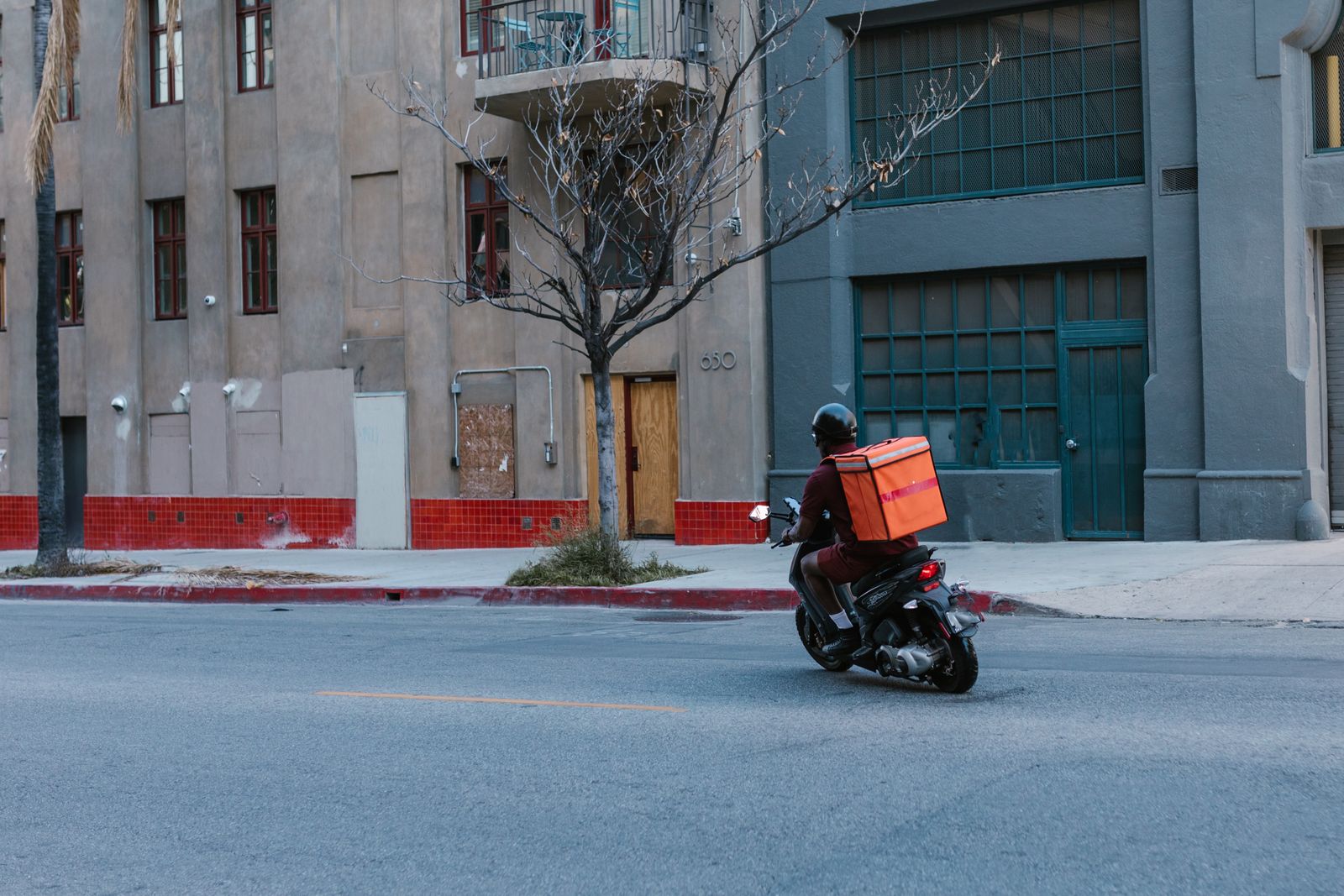
On July 16, the National Petroleum Authority pushed its price floor up again: petrol to GH¢13.28 a litre, diesel to GH¢14.35 — up 3.8% and 6% respectively from the first pricing window of the month. It's the kind of headline that scrolls past most people in a day. If you're a rider, it shouldn't.
Every time fuel goes up, the fee on a delivery job stays exactly the same. GHS 25 for a 5km run was GHS 25 last month and it's GHS 25 this month too. The only thing that changed is how much of that GHS 25 you actually keep after you've filled the tank. Most riders never sit down and do that subtraction — they just feel, vaguely, that things are tighter than they used to be, without being able to say by how much or which jobs are quietly not worth taking anymore.
This isn't a piece about whether fuel prices are fair. It's a piece about a five-minute calculation that tells you, job by job, what you're really earning — so a fuel hike stops being a vague feeling and starts being a number you can act on.
Why "the fee looked fine" isn't good enough anymore
When fuel was cheaper, the gap between a job's fee and its real cost was small enough to ignore. That gap doesn't stay small — it grows every time the pump price moves, and pump prices in Ghana have moved several times just this year.
The riders who feel the squeeze first aren't the ones doing bad business. They're the ones who never built the habit of checking. A job that was comfortably profitable in January can be barely break-even in July, with nothing about the job itself having changed — just the cost of getting there.
The calculation, step by step
You need three numbers, and none of them require an app or a spreadsheet.
1. Your bike's real fuel consumption — not the manufacturer's number.
Most small dispatch bikes (100–125cc) are commonly quoted somewhere in the 35–45km-per-litre range when ridden normally. But that figure assumes open roads and no idling. Accra traffic, hills, a loaded carrier, or a habit of leaving the engine running while you wait at a pickup point all pull that number down — sometimes a lot. Don't guess. Fill up, zero your trip meter (or note your odometer), ride normally for a few days, then fill up again and divide distance by litres used. That's your real number, and it's the only one worth using.
2. Today's fuel price.
As of the July 16 adjustment, that's GH¢13.28/litre for petrol at the NPA floor (diesel GH¢14.35, if that's your bike). Check it again after every pricing window — NPA adjusts floors roughly every two weeks, and COPEC and local news report each change.
3. The job's real distance — round trip, not one-way.
The distance that matters is pickup-to-drop, plus however far you have to ride back to where you'll likely pick up your next job. A 5km delivery that pulls you 5km further from your usual pickup zone isn't really a "5km job" once you account for the ride back.
Put it together:
Fuel cost of the job = (round-trip km ÷ your real km-per-litre) × today's fuel price
Net earning = what you're paid for the job − fuel cost
That's it. No app required — just those three numbers and one subtraction.
A worked example, using real Ghana delivery pricing
To make this concrete rather than abstract, it helps to run the math against an actual published fee structure rather than a made-up one. GoPiki's parcel delivery fee, for example, is a public, fixed formula: a GHS 10 base charge plus GHS 3 per kilometre, with a GHS 12 minimum and a GHS 150 cap. In practice that works out to roughly GHS 25 for a 5km job, GHS 40 for 10km, and GHS 70 for 20km. Riders keep 78% of that fee, with any tip on top going to the rider in full.
Take a 10km job (round trip: 20km) with a bike that gets a real 40km/litre, at today's GH¢13.28/litre petrol price:
- Fuel cost: (20 ÷ 40) × 13.28 = GH¢6.64
- Rider's share of the GHS 40 fee at 78%: GH¢31.20
- Net after fuel: GH¢24.56
Now the same job on a bike doing a real 25km/litre in heavy traffic:
- Fuel cost: (20 ÷ 25) × 13.28 = GH¢10.62
- Net after fuel: GH¢20.58
Same job, same fee — nearly GH¢4 difference in what actually lands in your pocket, purely because of how the bike performs in real conditions. That gap is exactly why "know your own number" matters more than any general rule of thumb.
Set yourself a floor — and use it
Once you can do this calculation in your head for a typical job, the next step is deciding your personal floor: the lowest net-per-job (or net-per-kilometre) figure you're willing to accept before you decline or wait for something better.
This is where a flexible, online/offline schedule actually pays off. If a job pings that falls below your floor once you've done the math, you're not obligated to take it just because it's there — you can wait five minutes for the next one instead. That flexibility is worth more with fuel at GH¢13+ a litre than it was when fuel was cheaper, because the cost of taking a bad job is higher too.
Track the week, not just the job
Doing the math on a single delivery is useful. Doing it across a full week tells you something more important: whether your actual take-home, after fuel, covers what you need it to.
A simple weekly habit: note your total fuel spend (receipts or fill-up amounts) against your total earnings for the week. If you're withdrawing regularly — most platforms, GoPiki included, allow withdrawal to bank or Mobile Money with a low minimum (GHS 20) and a handful of free withdrawals a month before a small fee kicks in — that withdrawal total is an honest, unavoidable number to compare against fuel receipts. It won't lie to you the way a mental estimate can.
If you're a seller paying a rider directly
If you run a WhatsApp or TikTok shop and you negotiate delivery costs with a rider yourself rather than through an app's fixed formula, this same math explains something you may have noticed recently: riders asking for a bit more per trip, or turning down runs they'd have taken a few months ago. It's not that they're being difficult — it's that the fuel side of their own math has shifted, and a rate that worked in January may quietly not work anymore. Understanding the calculation from their side makes it easier to agree on a number that's fair to both of you, rather than guessing.
The bottom line
Fuel prices in Ghana move often enough that "what a delivery job is worth" isn't a fixed number — it's something that needs recalculating every time the pump price does. The riders who stay ahead of that aren't the ones with better bikes or better luck. They're the ones who know their own real fuel number, check the current price, and do a 30-second subtraction before deciding whether a job is worth the ride.
If you're weighing delivery gig work in Ghana and want to see how a transparent, published fee structure works before you commit to a platform, GoPiki's rider page lays out the actual delivery-fee formula and payout split, and you can join the waiting list to be notified when onboarding opens in your area. For everything else GoPiki delivers — medicines, parcels, and bulk orders for social sellers — download the app.