
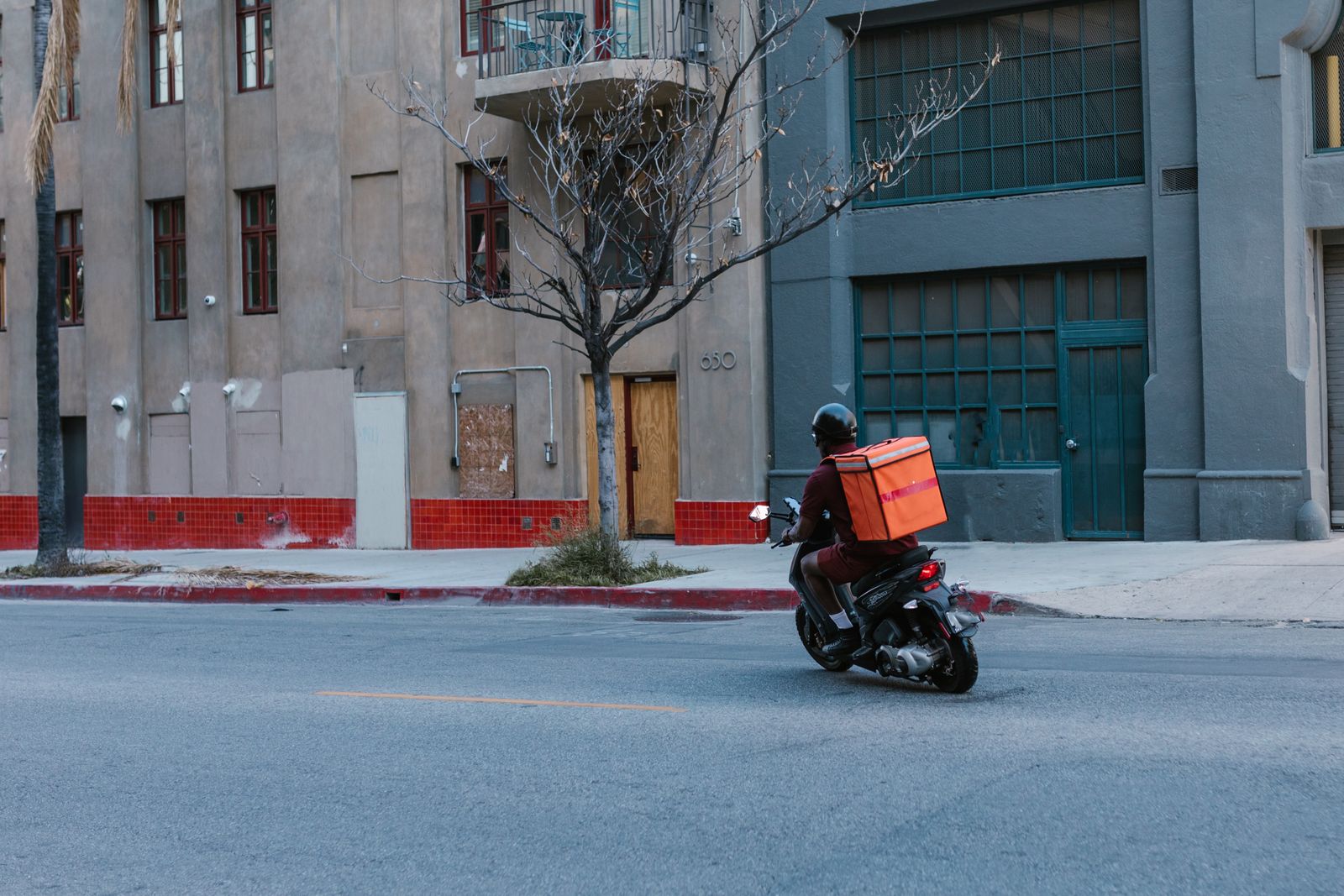
Nobody asked you to decide, so you probably haven't
Ask ten delivery riders in Accra, Kumasi, or Takoradi whether they're "doing this for now" or "in it for real," and most will pause before answering — not because the question is hard to understand, but because nobody made them answer it before they started. You signed up, you started getting jobs, and the plan became "keep going and see."
That's not a criticism. It's how almost every gig worker anywhere starts. The problem isn't riding without a five-year plan — plenty of good careers start that way too. The problem is riding for months or years while the bridge-versus-career question stays permanently unanswered, because the two paths call for genuinely different decisions: what gear to buy, whether to register formally, how much to save versus spend, which platforms to ride for, and when — if ever — to stop. Riding on autopilot without picking a lane means you end up under-investing in the plan you're actually living and over-investing in the one you're not.
The debate is real, and it's not settled in either direction
This isn't a question with an obvious right answer, and it's worth being honest about why. Ghana's gig delivery economy has grown fast enough that framing it as a fringe side hustle is out of date — Bolt Food Ghana alone reported roughly 30% year-on-year growth in 2025, part of a broader shift toward food and parcel orders moving online across Accra, Kumasi, and beyond. For a meaningful number of riders, this has quietly become the main job, not a side one.
At the same time, a 2026 academic study of platform-based delivery riders in Accra — covering couriers working with Bolt Food, Jumia, and Glovo — described the work using a pointed phrase: a "decent work cleft stick." Riders get real flexibility and real income, but the same study documented persistent job insecurity, arbitrary one-sided platform decisions, and a field that remains overwhelmingly male-dominated. Fairwork's independent ratings of Ghana's gig platforms found something just as concrete: on nine of ten rated platforms, workers earned at most the minimum wage (GHS 12.53/day at the time of that assessment) once fuel and other costs were subtracted — and on none of the ten platforms was there enough evidence that riders earned a living wage. Separately, broader research on delivery riders elsewhere has found accident or illness rates as high as 92% among riders surveyed — a reminder that "flexible income" and "physically demanding, risky work" are often the same job, not two different ones.
None of that means gig delivery is a bad option. It means it's a real trade-off, not a free lunch in either direction — which is exactly why deciding on purpose, instead of drifting, matters.
Ask yourself these five questions, honestly
You don't need a career counselor for this. You need fifteen minutes and an honest answer to each of the following.
1. What share of your total income does this actually make up right now?
If delivery work is genuinely supplementing another income source — a trading stall, a part-time job, school — that's a different situation than if it has quietly become 70-80% of what you bring home. Add it up. Most riders have never actually done the math.
2. Are you actively pursuing something else, or just saying you are?
"I'm doing this while I look for something better" is a real plan if you're actually sending applications, learning a trade, or building a business on the side. It's a different thing entirely if it's a sentence you say to yourself without matching action behind it. Be honest about which one describes you.
3. Has your weekly income from this work been flat, growing, or shrinking over the last three months?
Not a single good week — a trend. If it's been climbing as you've gotten better at picking hours and routes, that's a signal this could be a real, buildable income source. If it's been flat for months no matter what you try, that's useful information too.
4. Would a serious injury or your bike breaking down for two weeks be a manageable setback, or a genuine crisis?
Given the accident and illness rates documented above, this isn't a hypothetical. If the honest answer is "crisis," that alone tells you something about how much of your financial life is currently resting on one uninsured, unprotected income stream.
5. If you pictured yourself doing exactly this, at exactly this scale, three years from now — is that a fine outcome, or does it worry you?
This is the gut-check question. There's no wrong answer, but there is a dishonest one — the one where you haven't actually let yourself picture it.
If your honest answers point to "bridge"
If this is genuinely temporary — income while you finish school, save toward equipment for a trade, or search for formal work — the goal is to get the most out of it without over-investing in a path you plan to leave.
- Keep your costs variable, not fixed. Don't take on hire-purchase debt for a second bike or premium gear unless you'd want it anyway for the next thing. Ride within what your current setup can handle.
- Set an actual exit trigger, not a vague timeline. "Once I save GHS X" or "once I hear back from Y" is a decision you can act on. "Eventually" isn't.
- Still don't skip the safety basics. A bridge job doesn't mean a bridge helmet. Confirm your motor insurance actually covers commercial/paid delivery use — a short-term plan that ends in a hospital bill and no cover isn't actually cheaper.
- Track what you're saving, not just what you're earning. If none of the income is going toward the next thing, it's not really a bridge — it's just riding.
If your honest answers point to "real path"
If this is becoming your primary income, or you'd genuinely be glad to still be doing it in three years, then it's worth treating like the actual job it is, not a placeholder.
- Formalize your status. Register for your PCSRC Rider ID through iCOLMS-GH if you haven't already — it's the difference between being a recognized courier-operator and an informal one, and it matters at roadside checks and for any future benefits tied to formal registration.
- Get your numbers right, not guessed. Know what a job is actually worth after fuel costs at current prices, and use your online/offline hours deliberately rather than by habit. Small margins add up fast over a year of full-time riding.
- Insure properly, now — not "when you can afford it." The same accident data that makes this work risky as a bridge makes it more urgent as a career. Confirm your policy actually covers commercial use before you're relying on this income full-time, not after.
- Don't rely on one platform. Given how uneven the Fairwork pay and conditions ratings are across platforms, riders treating this as a real income stream are better served comparing terms — visible per-job pay, withdrawal terms, how batch orders are compensated — across more than one app, rather than assuming loyalty to one company pays off.
- Build toward something with a ceiling above "more jobs, same rate." Some of the more skeptical research on gig work makes a fair point: task-based platform work often has limited built-in room to grow. If you're treating this as a real path, think about what the next rung actually is — training, a small fleet of your own riders, a formal transport business — rather than assuming more hours alone gets you somewhere new.
The part that applies either way
Whichever answer you landed on, one thing doesn't change: the risk and pay data above is the honest floor of this work right now, for everyone, regardless of whether you plan to do it for six months or six years. Deciding your path doesn't make the road safer or the pay higher on its own — it just means you're making informed choices about gear, insurance, savings, and platform loyalty instead of drifting through them.
If you're weighing where to ride while you're figuring this out, GoPiki's rider setup runs on a published, fixed formula — a GHS 10 base fee plus GHS 3/km, with riders keeping 78% of that base fee and any tip going to the rider in full — plus an online/offline toggle and withdrawals to bank or Mobile Money anytime, GHS 20 minimum. See how it works on GoPiki's rider page, including how to join the waiting list for when onboarding opens in your area. And if you're a customer or social seller who wants medicine, parcels, or bulk orders handled by riders working on terms they've actually thought through, download GoPiki.