
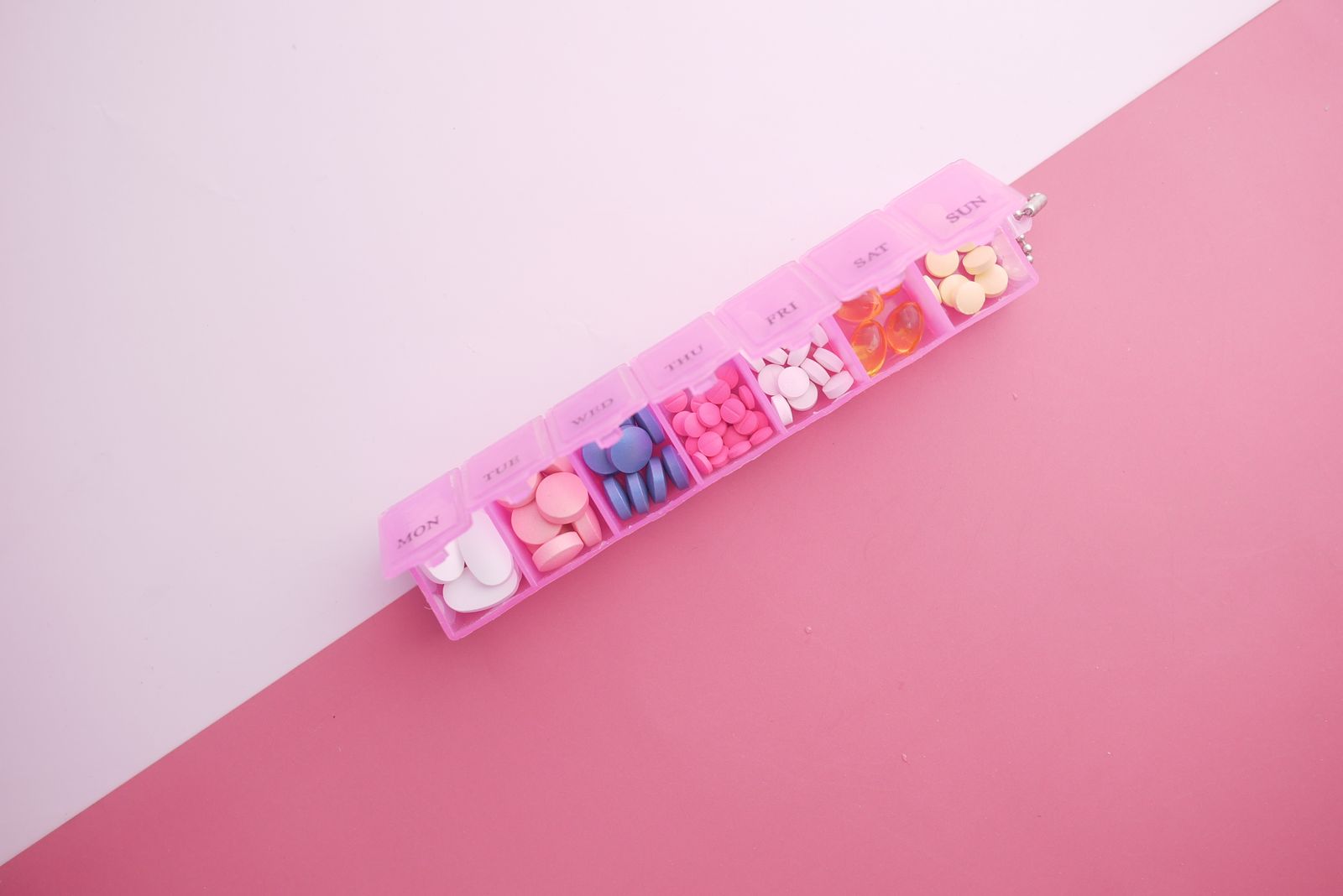
The knowledge you have isn't the problem
Here's a statistic that should stop you for a second: in a 2026 study of older adults managing hypertension in peri-urban Ghana, 80.2% demonstrated good knowledge of the condition — they understood what high blood pressure is, why it matters, what it puts them at risk for. And in that same group, 60.9% still showed poor medication adherence. Half had missed at least one day of medication in the two weeks before being asked. Half hadn't even taken the previous day's dose.
That gap — knowing exactly what you should be doing, and still not doing it — is the real story. It isn't a story about people who don't understand their diagnosis. It's a story about a system that quietly assumes medicine-taking is simple, when for a chronic condition, it's a logistics problem dressed up as a discipline problem.
This matters at scale in Ghana right now. The World Health Organization estimated non-communicable diseases accounted for 45% of all deaths in Ghana in 2024. Korle Bu Teaching Hospital alone recorded more than 5,000 complicated diabetes referrals and over 2,000 kidney cases in just the first half of 2025 — with clinicians there noting people under 40 are increasingly showing up with cardiovascular disease, not just older patients. A separate national survey put overall hypertension prevalence in Ghana at 22.7%. This isn't a rare condition affecting a small group. It's a widespread, growing reality, and for most people living with it, the medicine isn't optional — it's permanent.
Why "just remember to take it" doesn't hold up
Most health advice about chronic medication stops at "take it as prescribed," as if the hard part is understanding the instruction. It isn't. Researchers who actually asked Ghanaian patients why they weren't adherent got a specific, unglamorous list of reasons, and forgetfulness is only one line on it:
- Lack of reminders built into daily life — cited by over half of patients in the peri-urban Ghana study.
- Competing family duties — over half again. A dose doesn't compete well against a sick child or an urgent household task.
- Financial constraints — roughly half. Money is tight in a specific week, and medicine is the line item that gets skipped because the consequence isn't immediate.
- Drug unavailability — nearly half. You go to refill, and the specific medicine simply isn't at the counter that day.
- Stopping once they feel better — again, nearly half, even though blood pressure and blood sugar don't announce themselves the way pain does. Feeling fine is not the same as being controlled, and stopping or changing a dose without your doctor is a decision for you and your prescriber to make together, not something to decide alone in a moment of feeling okay.
A separate national study of Ghanaian diabetes and hypertension patients found actual adherence rates of just 38.5% and 47.7% — both far below the 90% clinicians consider adequate. Read the reasons list again: only one item on it (forgetting) is really about memory. The rest are about supply, money, competing demands, and what happens the one day your usual source doesn't have what you need. Those are solvable with a system. They are much harder to solve with willpower alone.
The habit that treats chronic medicine like chronic medicine
The core mistake is treating a forever-medication the way you'd treat a one-time course of antibiotics: buy it when you're sick, stop thinking about it once the course ends. Chronic medication has no end date, which means the buying pattern has to change too — from "get it when I run out" to "get it before I run out." A few concrete habits that hold up better than good intentions:
1. Know your real days-of-supply, and set a trigger date — not a trigger pill count.
Don't wait until you're down to your last dose to think about a refill. Count backwards from your pack size: if you have a 30-day supply, mark day 23 on your phone calendar as "go get more" — a full week of runway before you're actually out. A week of slack absorbs a stockout at your usual pharmacy, a busy week at work, or a day you simply forget to check.
2. Attach the reminder to something you already do, not to memory alone.
"Lack of reminders" was one of the top-cited reasons for missed doses — which tells you the fix isn't trying harder to remember, it's removing the need to remember. Set a recurring phone alarm at the same time you already do something daily — brushing your teeth, your evening prayer, locking the shop. A reminder tied to an existing habit survives a busy week; a mental note doesn't.
3. Have a second pharmacy in mind before your first one runs dry.
Drug unavailability is one of the most commonly cited reasons Ghanaians on chronic medication actually miss a refill — and when your one usual pharmacy or chemical shop doesn't have it, the realistic alternative for a lot of people is a half-day trip across town, which is exactly the kind of friction that turns into a missed week. This is one of the few pieces of this problem an app can genuinely help with: instead of your refill depending on one specific shop's shelf that day, uploading your prescription once lets you get quotes back from several nearby pharmacies at the same time, so a stockout at one doesn't mean the whole refill stalls — you just take the next quote. GoPiki's medicine delivery flow works this way for exactly this reason: you upload the prescription, nearby pharmacies quote you, and whichever one actually has it gets it to your door.
4. Never let cost be the silent reason you skip a dose.
Financial constraint was cited by roughly half of non-adherent patients in the research above — and the dangerous part isn't the cost itself, it's that people quietly cut a dose in half or skip refills without telling anyone, rather than asking what their actual options are. If cost is genuinely the barrier, that's worth raising directly with your pharmacist or prescriber, and worth checking against what NHIS actually covers before assuming you have no choice — we've written a full breakdown of what NHIS does and doesn't cover for medicine in Ghana if that's the gap you're hitting.
5. Keep your prescription somewhere you can find it in ten seconds, not ten minutes.
A photo of the actual prescription — not just the drug name typed from memory — saved in your phone means every future refill starts from the real document instead of what you remember about last month's visit. That's not just a safety habit; it's what makes step 3 above actually fast when you need it to be.
This is a logistics fix, not a medical one
None of the above changes what your doctor prescribed or how much of it you should take — that decision stays exactly where it belongs, between you and whoever is treating you. What this fixes is the much more mundane, much more common failure point: the week your refill quietly slips because nobody built a system for it to not slip. Given that roughly 6 in 10 people managing a condition like hypertension in Ghana are dealing with exactly that gap, "mundane" is doing a lot more damage than it sounds like it should.
GoPiki is a Ghana-based delivery platform connecting patients with nearby pharmacies for prescription and medicine delivery. Upload a prescription or browse the catalogue, compare real quotes from pharmacies near you, and get it delivered to your door. See how medicine delivery works, or download GoPiki on Google Play and the App Store.